Speech
Speech is simply the way we share what’s on our minds to make a real connection with others. It’s about taking an idea and putting it into words so that people don't just hear you, but actually understand and feel what you’re saying. Whether it’s a big presentation or a quick toast, speech is our best tool for getting a point across, solving problems, and bringing people together. At the end of the day, it’s all about finding your voice and using it to say something that matters.
Speech Events:
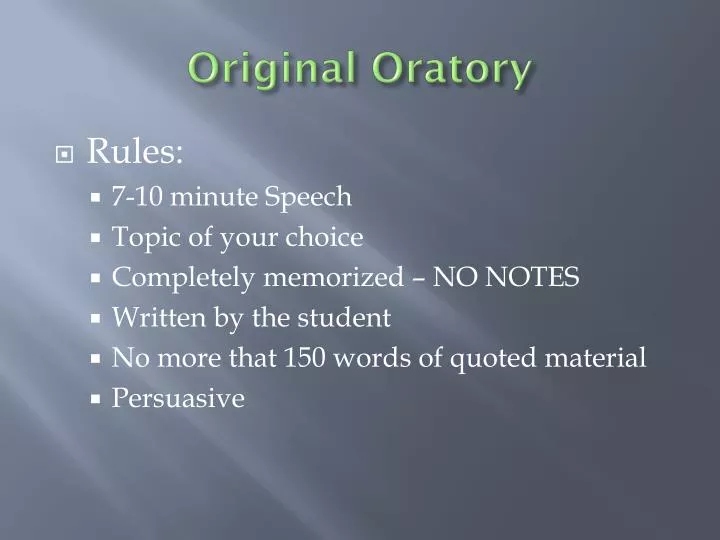
Original Oratory (OO)
In Original Oratory, a student prepares and presents a 10-minute persuasive speech on a topic they truly care about. This speech is memorized, allowing the speaker to connect with the audience and convey their passion effectively. The goal is to persuade listeners by sharing personal insights and compelling arguments. By focusing on a subject that resonates with them, students can inspire others and spark meaningful conversations.
Informative Speaking (INF)
Informative speaking is an event where participants create and deliver their own speeches to teach the audience about important topics. These speeches often include visual aids, which help to make the information clearer and more engaging for listeners. In speech and debate competitions, informative speaking allows students to showcase their research skills and ability to communicate effectively. By presenting facts and insights in a structured way, speakers can inspire their audience to learn more about the subject at hand.
Impromptu Speaking (IMP)
Impromptu speaking involves students receiving a prompt, which can be a quote or a single word, and then having a brief period to prepare their thoughts. They must quickly organize their ideas and deliver a speech that lasts between five to seven minutes. This activity helps students improve their public speaking skills and think on their feet. It encourages creativity and boosts confidence as they learn to express their thoughts clearly and effectively under time pressure.
Declamation (DEC)
Declamation is an event usually meant for middle school students and beginners in competitions. In this activity, participants deliver a speech that has already been presented by someone else, showcasing their ability to interpret and perform the material. This format allows students to practice their public speaking skills while gaining confidence in front of an audience. By using established speeches, they can focus on delivery and expression, making it a valuable experience for novice competitors.
Dramatic Performance (DP)
A dramatic performance involves acting out a piece of literature, whether it’s a drama or a humorous work, with a strong emphasis on developing the characters. This type of performance requires the actor to memorize their lines and fully embody the roles they are portraying, allowing the audience to connect with the characters on a deeper level. In these performances, the focus is not just on delivering lines but also on expressing emotions and motivations that drive the characters. By doing so, actors can bring the story to life, making it engaging and relatable for the audience. This combination of memorization and character exploration is what makes dramatic performances so captivating.
Extemporaneous Speaking (EXT)
Students participating in Extemporaneous Speaking research a current event and prepare a speech within 30 minutes. These speeches often focus on issues related to local or state governance in FCDI. This activity helps students develop their public speaking skills and stay informed about important topics in their community. By discussing relevant issues, they learn to express their opinions clearly and confidently.